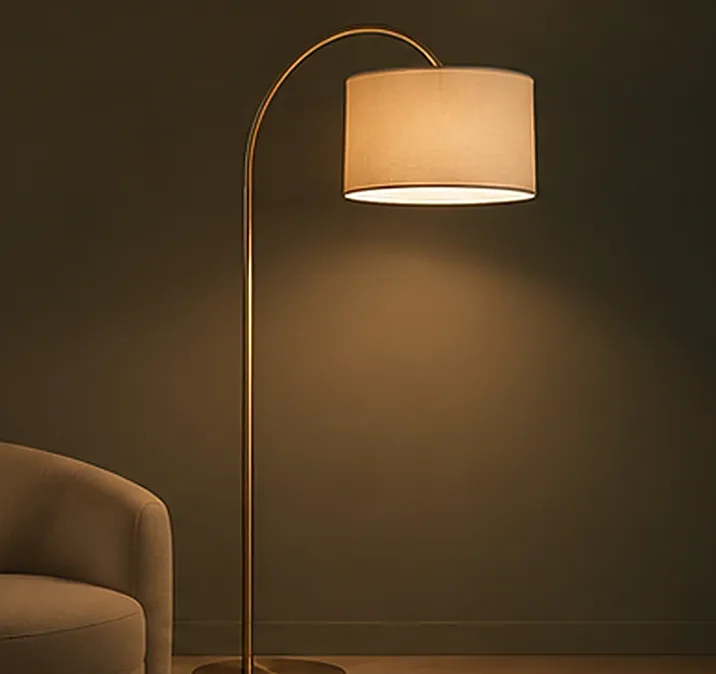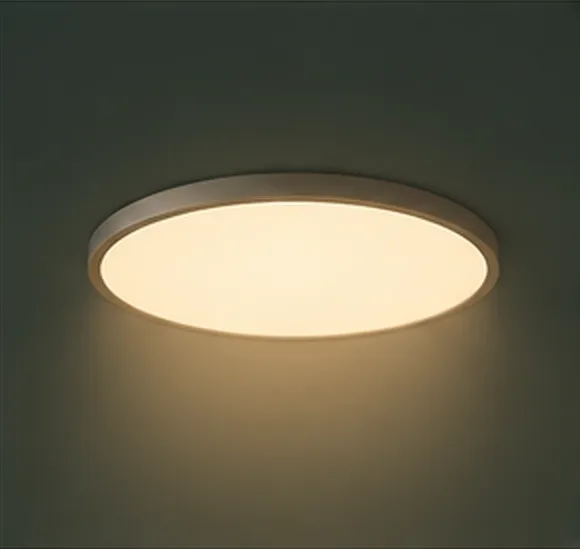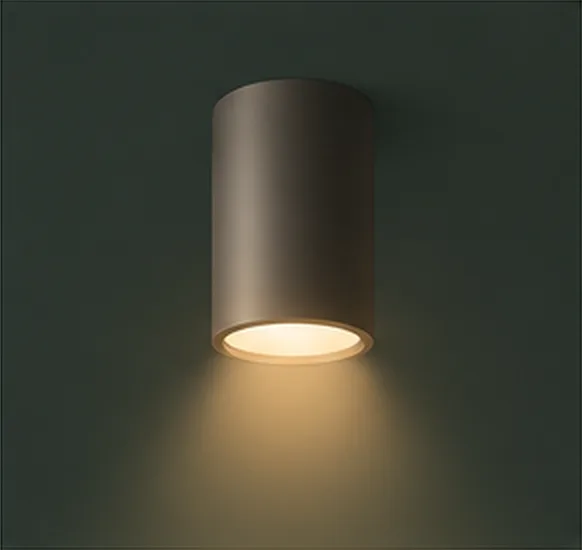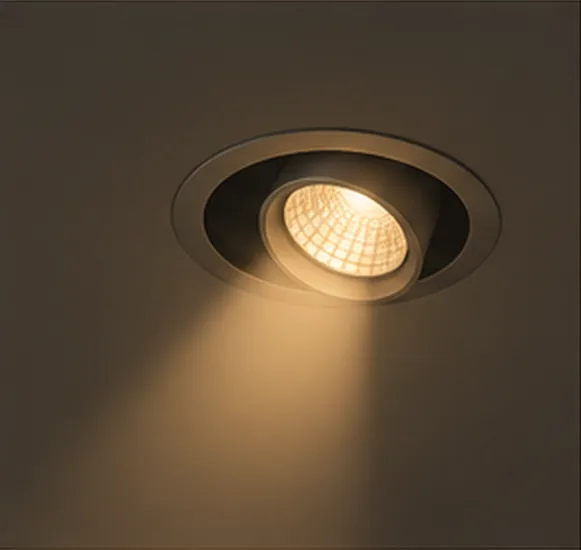
In a lighting shop, it is tempting to compare fixtures by size, wattage and how bright they look when switched on. A panel light may appear simple and practical. A COB may look more architectural. Which one should go in your home?
Before choosing, there is a better question: what do you want the light to do?
These two categories can work beautifully together, but they are not interchangeable just because both use LEDs.
Think about distribution, not just brightness
A typical LED panel is designed for relatively broad, diffused illumination. It can be useful where general light is the priority: circulation areas, utility spaces, some kitchens or other rooms where an even spread is helpful. Panel designs vary, so the exact spread must come from the model's information.
A COB light commonly uses an LED source with an optical system that can produce a more controlled beam. Depending on the reflector, lens and beam angle, it may highlight a table, create pools of light or emphasise a feature. Not every COB is a narrow spotlight. Some have broad beams, and some are adjustable.
That distinction is why the ceiling plan should follow the intended effect. Filling an entire room with one type just because it is familiar is rarely the most thoughtful approach.
A simple living-room example
Imagine a sitting area with a sofa, a textured wall and a nearby passage. You may want a broad source for everyday general use. But you may also want focused illumination on the coffee table and a controlled wash on the textured surface.
Choosing only broad diffused fixtures might make everything visible while losing that visual emphasis. Choosing only narrowly focused lights might create beautiful accents but leave the room patchy for some activities. Layering and sensible switching groups can resolve the problem.
The exact count and spacing cannot be calculated responsibly from a generic thumb rule. Ceiling height, beam distribution, surface reflectance, furniture, available daylight and target tasks all matter.
What about glare?
People sometimes assume all COBs are harsh or all panels are comfortable. Neither statement is reliable. A diffused panel can still appear excessively bright in someone's direct view. A carefully recessed COB with appropriate shielding may feel more comfortable than an exposed source.
Look beyond wattage. Check whether the source is visible from normal positions, the beam angle, the recess depth and whether the fitting can be aimed. Be wary of a fixture positioned directly over a bed, sofa or workstation without considering sightlines.
Power consumption and light output
Watts tell you the electrical power used; lumens describe a measure of emitted visible light. These numbers help compare products, but they do not by themselves explain where the light will land. Two fixtures with similar total lumen output may create quite different effects because of optical distribution.
For technical work, a lighting plan should consider suitable illuminance on the intended surface, not just total fixtures in the room. Product-level data—ideally including photometric information—makes that possible.
Installation details that are easy to miss
Recessed panels and COBs can have different cut-outs, depths, drivers and service requirements. The selected model determines those details. Don't use another product's cut-out just because the front face appears similar.
Some products support dimming or colour tuning when paired with specified drivers and controls; others don't. Compatibility must be checked individually. A COB or panel label alone doesn't establish that feature.
So which should you buy?
If your priority is broad general illumination, begin by examining suitable diffused panels or downlights. If you want directional emphasis, consider COBs with appropriate optics. In many spaces, the strongest answer is not “COB or panel”; it is “which combination creates the lighting layers this room needs?”
A question to ask when two fittings look identical
Ask to see them illuminating the same wall or working surface from the same mounting position. Look at the edge of the beam, the uniformity of the light and the visibility of the source from an angle. A product photo shows you the fixture. A light-on-surface demonstration shows you something much closer to its real purpose.
For professional work, request the exact datasheet rather than accepting a verbal description of the entire category. Model variants can change the answer dramatically.
A good selection conversation starts with the room's function and ends with documented fittings suited to that function. The fixture is the tool. The light on the surfaces is the result.
Explore the lights: Architectural lighting · The light calculator
Have a lighting requirement? Ask us on WhatsApp.